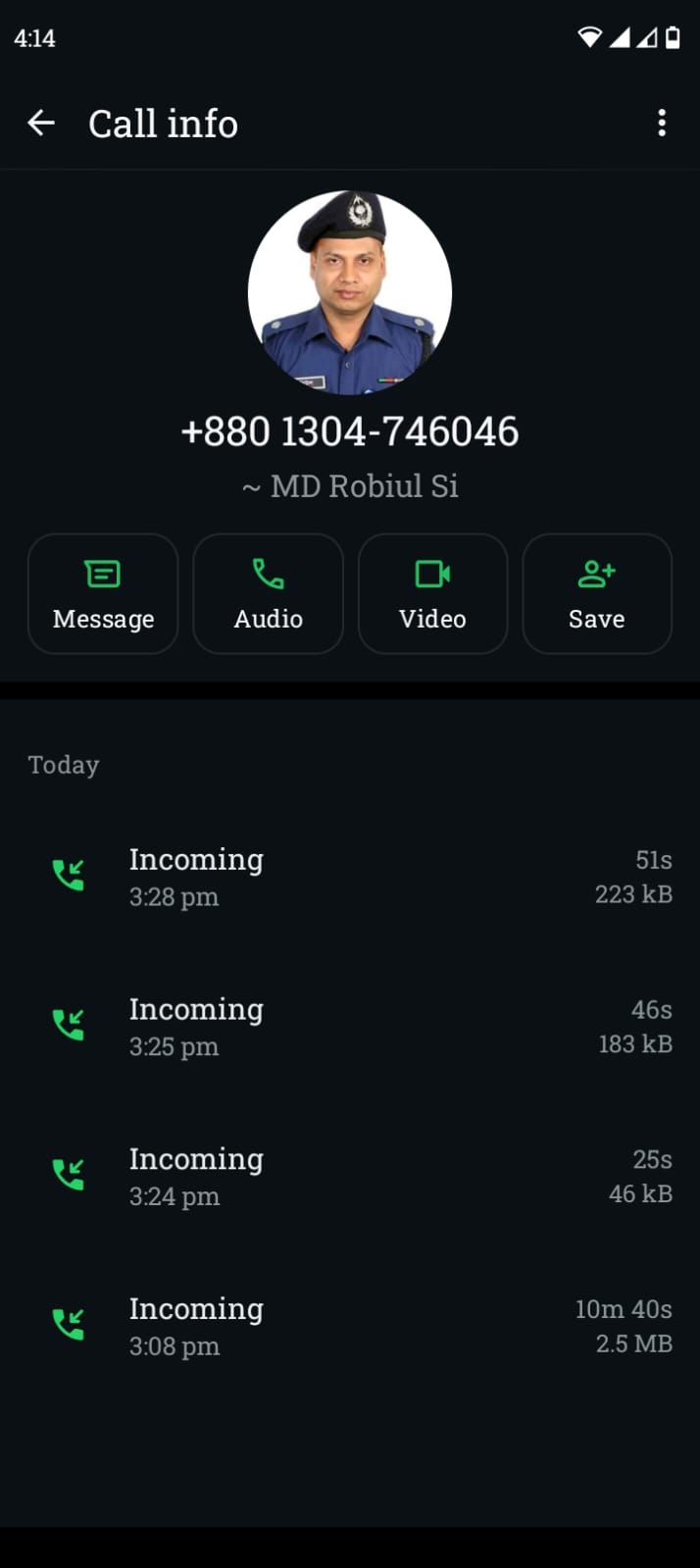
The day before Eid, around noon — we had just finished lunch and were resting. Suddenly, a close family friend who works as a marketing officer for a large steel rod company came to me, visibly shaken. He told me someone had called him on WhatsApp, claiming to be a police officer.
The caller said: "There's a WhatsApp group where people are saying bad things about you and other officers. I'll add you to the group and give you the password — you can see the proof yourself!"
This frightened him immediately — and the scammer sensed that fear and exploited it. Using this fear-inducing tactic, they successfully hacked his WhatsApp account.
The Psychological Pressure Intensifies
After gaining access, the scammer moved to the second phase — applying psychological pressure:
- "Your location is being tracked."
- "A police team has been dispatched."
- "If you don't want to get caught, turn off your phone right now."
Then they gave him another number and told him to call it immediately.
At this point, the victim started to suspect something was wrong and came to me. I was in deep sleep at the time and couldn't fully process what was happening. Just then, the scammer called again!
I picked up the phone, still half-asleep, and asked: "Where exactly are you seeing my location?"
The moment I asked that question, the scammer went silent and immediately hung up. Right after that, we noticed messages being sent from his WhatsApp account asking contacts for money!
How I Confirmed It Was a Scam
Before I even answered the phone, I checked the number on Truecaller. It clearly showed: "Fake Police Scammer" — already reported by others.
Lessons from This Experience
Here are some crucial takeaways to protect yourself:
1. Don't Panic
Scammers rely on creating panic to force you into making bad decisions. Stay calm and think logically.
2. Never Trust Without Verification
Don't believe anyone who claims to be from "Police," "CID," or "Cyber Team" without proper verification through official channels.
3. Enable Two-Step Verification on WhatsApp
Go to: Settings > Account > Two-step verification
This adds an extra layer of security that makes it much harder for scammers to hijack your account.
4. Check Linked Devices Regularly
Go to: WhatsApp > Linked Devices
Check regularly to see if someone has opened your account on another device without your knowledge.
5. Use Truecaller to Verify Unknown Numbers
Many scam numbers are already reported by previous victims. A quick Truecaller check can save you from falling into the trap.
6. The Golden Rule
"Do the opposite of what the scammer tells you to do!"
If they say "turn off your phone immediately," that's exactly when you should stay online and verify everything.
Red Flags to Watch Out For
- Unsolicited calls from "police" or "government officials"
- Pressure to act immediately without time to think
- Requests for passwords, OTPs, or personal information
- Threats of arrest or legal action over the phone
- Being asked to download apps or click suspicious links
What to Do If You're Targeted
- Stay calm — don't let fear cloud your judgment
- Verify the caller's identity through official channels
- Don't share any personal information or passwords
- Check the number on Truecaller or similar services
- Report the number to local cybercrime units
- Warn your contacts if your account gets compromised
Conclusion
Cybercriminals are getting more sophisticated every day, using psychological manipulation and social engineering to exploit people's fears. The best defense is awareness and a healthy dose of skepticism.
Remember: Real authorities don't operate through WhatsApp threats. If something feels off, it probably is. Trust your instincts, verify everything, and never let fear rush you into making decisions.
Stay safe out there, and share this with your friends and family — awareness is our strongest weapon against scammers.